How to Achieve AI Safety and Regulatory Compliance: Ethical AI, Risk Management, Cybersecurity, and Best Practices for Secure AI Development

Introduction
Artificial Intelligence (AI) has transformed industries, automating processes, enhancing decision-making, and improving efficiencies. From self-driving cars and healthcare diagnostics to cybersecurity and financial forecasting, AI’s impact is profound. However, with great power comes great responsibility. AI can be misused, biased, or even dangerous if not properly controlled.
Governments, regulatory bodies, and technology firms are working together to establish safety guidelines, ethical frameworks, and cybersecurity measures to prevent AI from becoming a risk to society. Companies like 4DCompass InfoSolutions Private Limited provide consulting services in AI lab infrastructure, networking, research, deployment, and security to ensure AI remains safe, reliable, and compliant with global regulations.
This article explores:
✅ The need for AI control and safety
✅ AI risks and ethical concerns
✅ Major AI safety protocols
✅ Global AI regulations and their compliance standards
✅ How 4DCompass InfoSolutions Private Limited supports AI safety
✅ Future trends in AI governance and safety

The Need for AI Control and Safety
AI is advancing rapidly, and without proper oversight, it can lead to serious risks, including:
- Bias and Discrimination – AI models trained on biased data can produce unfair results.
- Security Vulnerabilities – AI-driven cyberattacks, deepfakes, and data breaches pose threats.
- Autonomous Decision-Making Risks – AI making life-critical decisions without human intervention can be dangerous.
- Unethical Surveillance – AI-powered monitoring can lead to privacy violations and misuse.
- Manipulation of Information – AI-generated misinformation can influence public opinion and elections.
To ensure responsible AI use, governments, researchers, and corporations must implement strict control mechanisms through regulations, cybersecurity frameworks, and ethical guidelines.
AI Safety Protocols and Best Practices
To minimize risks, organizations must adopt AI safety protocols that cover:
1. Explainability and Transparency
- AI decisions should be explainable to humans.
- Black-box AI models should be avoided in critical applications.
2. Human-in-the-Loop Systems
- AI should not be completely autonomous in decision-making.
- Humans should review AI recommendations in healthcare, defense, and finance.
3. Cybersecurity for AI Systems
- AI models must be protected against hacking and adversarial attacks.
- Encryption and access control should secure AI data and models.
4. Bias Detection and Fairness
- AI models must be audited for bias before deployment.
- Diverse and inclusive datasets should be used for training.
5. Continuous Monitoring and Compliance
- AI systems should undergo regular safety audits.
- Compliance with regulatory frameworks is mandatory.
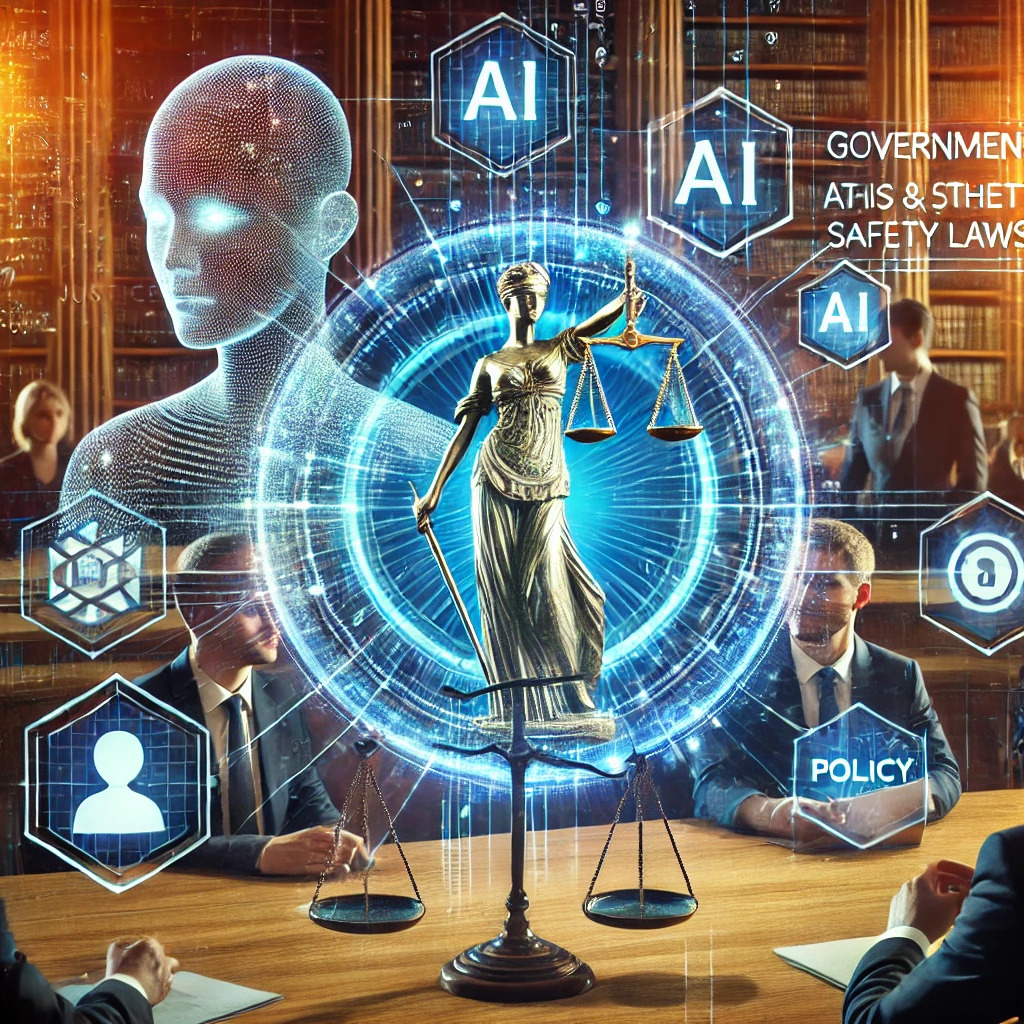
Global AI Regulatory Guidelines
Various governments and organizations have introduced AI regulations to enforce safe and ethical AI practices. Here are some of the most notable frameworks:
1. United States – Executive Order on AI Safety
- Document: Executive Order 14110
- Overview: Establishes AI safety measures, cybersecurity, and fairness principles.
- Key Provisions: AI risk assessment, transparency requirements, and ethical AI development.
2. European Union – AI Act
- Document: AI Act (Regulation (EU) 2024/913)
- Overview: Defines AI risks and mandates stricter safety controls for high-risk AI applications.
- Key Provisions: Biometric AI restrictions, algorithm transparency, and safety standards.
3. India – MeitY AI Governance Guidelines
- Document: MeitY AI Ethics Report 2025
- Overview: Establishes ethical AI policies and compliance models.
- Key Provisions: AI risk categorization, fairness principles, and cybersecurity measures.
4. China – AI Regulatory Framework
- Document: AI Law of China (Draft 2024)
- Overview: Focuses on controlling AI algorithms, deep learning models, and generative AI.
- Key Provisions: AI licensing, security audits, and ethical AI restrictions.
5. NIST AI Risk Management Framework (USA)
- Document: NIST AI RMF 1.0
- Overview: Provides a framework for managing AI risks.
- Key Provisions: AI safety protocols, risk assessment methodologies, and compliance monitoring.

How 4DCompass InfoSolutions Private Limited Ensures AI Safety
For organizations working with AI, 4DCompass InfoSolutions Private Limited offers consulting in:
✅ AI Lab Infrastructure: High-performance computing setups for AI model training.
✅ Network Security for AI: Secure AI networking and segmentation strategies.
✅ AI Deployment & Testing: Ensuring AI models comply with global safety regulations.
✅ Data Protection & Compliance: Implementation of AI-specific cybersecurity solutions.
Their expertise in hardware and networking ensures AI labs meet international safety standards and regulatory requirements.

Future Challenges in AI Safety and Regulation
Even with strict regulations, AI safety remains an ongoing challenge:
- AI-powered cyberattacks are evolving.
- Bias in AI models continues to be an issue.
- Universal AI safety standards are still under development.
To address these challenges, organizations need:
✅ Continuous AI monitoring and security assessments.
✅ Stronger AI ethics frameworks and transparency.
✅ Government and industry collaboration on AI safety policies.

Conclusion
AI is a powerful tool that must be controlled responsibly. Governments, regulatory bodies, and organizations like 4DCompass InfoSolutions Private Limited are working to ensure that AI remains safe, secure, and beneficial to society.
By following global AI safety regulations, adopting cybersecurity protocols, and investing in ethical AI research, we can ensure AI continues to drive innovation while minimizing risks.
Disclaimer
This article is for informational purposes only and does not constitute legal, financial, or professional advice. AI regulations and safety protocols vary by country, and organizations should consult legal and AI experts for specific compliance requirements. While 4DCompass InfoSolutions Private Limited provides expert consulting, final AI safety and compliance decisions remain the responsibility of individual organizations.

