Structured Cabling Solutions: How 4DCompass Designs Better Infrastructure

Structured Cabling: The Foundation of Modern Network Infrastructure
In today’s digitally connected world, a robust and reliable network infrastructure is the backbone of any organization. Whether it’s a small business, a sprawling enterprise, or a data-driven institution, the efficiency of communication and data transfer relies heavily on how well the underlying cabling system is designed and implemented. This is where structured cabling comes into play—a standardized, organized approach to wiring that ensures scalability, flexibility, and performance.
In this comprehensive article, we’ll explore every facet of structured cabling, from its definition and components to its benefits, standards, and installation challenges. We’ll also highlight how 4DCompass InfoSolutions Private Limited plays a pivotal role in designing and building tailored infrastructure that meets specific organizational requirements.
What is Structured Cabling?
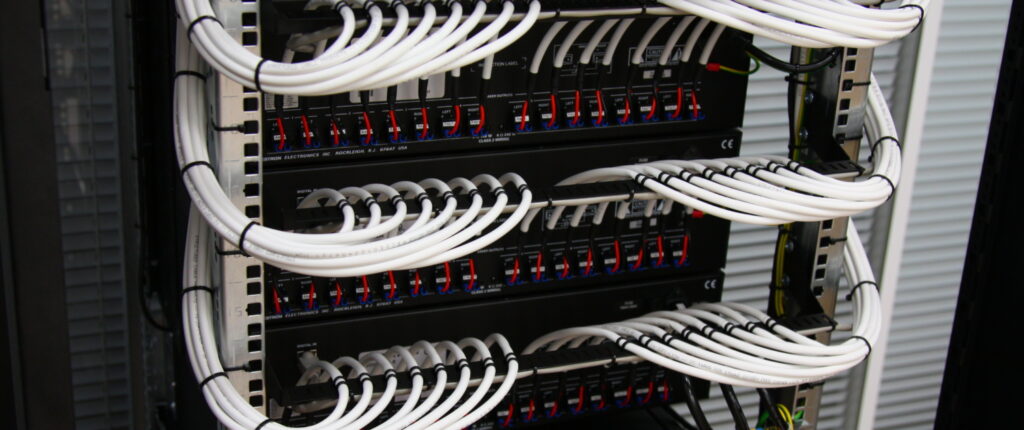
Structured cabling refers to a complete system of cables, connectors, and related hardware designed to create a telecommunications infrastructure that supports various applications—data, voice, video, and more. Unlike traditional point-to-point cabling, which connects devices directly in a haphazard manner, structured cabling follows a hierarchical and organized layout.
This standardization simplifies maintenance, enhances scalability, and ensures compatibility with future technologies. The concept revolves around creating a unified system that integrates all network components into a cohesive framework. From the point where external services enter a building (entrance facility) to the individual workstations, structured cabling provides a seamless flow of connectivity. Its versatility makes it ideal for commercial buildings, data centers, educational institutions, and industrial facilities.
The Six Key Components of Structured Cabling
Structured cabling is divided into six essential subsystems, each contributing to the overall functionality of the network infrastructure.
Entrance Facility
This is where external cabling (from telecom providers or ISPs) enters the building. It includes protective hardware to safeguard connections from environmental factors like lightning or interference.
Equipment Room
A centralized space housing critical networking equipment such as servers, switches, and routers. It connects the entrance facility to the backbone cabling.
Backbone Cabling
Also known as vertical cabling, this subsystem links the equipment room to telecommunications rooms across different floors or buildings. It typically uses high-capacity cables like fiber optics to handle large data volumes.
Telecommunications Room (TR)
These rooms serve as distribution hubs, connecting backbone cabling to horizontal cabling. They house patch panels, switches, and other equipment.
Horizontal Cabling
This extends from the telecommunications room to individual workstations or devices. It commonly uses twisted-pair copper cables (e.g., Cat6) or fiber optics.
Work Area Components
The final link in the chain, this includes outlets, connectors, and patch cords that connect end-user devices like computers, phones, or IoT systems to the network.
These components work together to create a modular, manageable, and future-ready infrastructure.

Types of Cables Used in Structured Cabling
The performance of a structured cabling system hinges on the type of cables used. Here are the most common options:
- Twisted-Pair Copper Cables: Available in unshielded (UTP) and shielded (STP) variants, these are widely used for horizontal cabling. Categories like Cat5e, Cat6, and Cat6a offer varying levels of bandwidth and speed.
- Fiber Optic Cables: Ideal for backbone cabling, fiber optics use light to transmit data, providing ultra-high speeds, long-distance capabilities, and immunity to electromagnetic interference. Single-mode and multi-mode options cater to different needs.
- Coaxial Cables: Though less common today, coaxial cables are still used in specific applications like video transmission.
- Patch Cables: Short, flexible cables that connect devices to outlets or patch panels, ensuring an organized and efficient setup.
Choosing the right cable depends on factors like data speed requirements, distance, and environmental conditions.
Benefits of Structured Cabling
Structured cabling offers a host of advantages that make it indispensable for modern organizations.
Scalability and Flexibility
Its modular design allows easy expansion as businesses grow or technology evolves, while supporting multiple applications (e.g., VoIP, Ethernet, video conferencing) on a single system.
Reliability and Simplified Maintenance
Organized wiring reduces the risk of downtime due to faults or interference, and clear labeling and documentation make troubleshooting and upgrades straightforward.
Cost-Effectiveness and Future-Proofing
While initial installation may require investment, long-term savings come from reduced maintenance and easy adaptability. It’s designed to accommodate emerging technologies, minimizing the need for frequent overhauls.
These benefits translate into improved productivity, reduced operational costs, and a competitive edge.
Structured Cabling Standards
To ensure consistency and performance, structured cabling adheres to industry standards.
- ANSI/TIA-568: A set of telecommunications standards from the Telecommunications Industry Association, widely used in North America. It covers commercial building cabling specifications.
- ISO/IEC 11801: An international standard for generic cabling systems, focusing on flexibility and performance across various environments.
- BICSI: Provides best practices and guidelines for cabling design and installation, enhancing system reliability.
Compliance with these standards ensures interoperability, safety, and optimal network performance.
Challenges in Structured Cabling Implementation
Despite its advantages, implementing structured cabling comes with challenges:
- Planning Complexity: Requires a thorough assessment of current and future needs, which can be time-consuming.
- Installation Disruptions: Retrofitting older buildings may disrupt operations.
- Cost: High-quality components and professional installation can be expensive upfront.
- Maintenance: Regular testing and updates are necessary to maintain performance.
Overcoming these hurdles requires expertise, meticulous planning, and a focus on long-term goals.
How 4DCompass InfoSolutions Private Limited Enhances Structured Cabling
When it comes to designing and building a tailored infrastructure, 4DCompass InfoSolutions Private Limited stands out as a trusted partner. This innovative company specializes in delivering end-to-end structured cabling solutions that align with an organization’s unique requirements. Here’s how they excel:
1. Comprehensive Needs Assessment
4DCompass begins by conducting an in-depth analysis of the client’s current infrastructure, business goals, and future expansion plans. This ensures the cabling system is scalable and capable of supporting evolving technologies.
2. Custom Design Expertise
Their team of certified professionals designs a structured cabling layout that adheres to industry standards (e.g., TIA-568, ISO/IEC 11801) while optimizing for the client’s specific environment—be it an office, data center, or industrial facility.
3. High-Quality Components
4DCompass sources premium cables (e.g., Cat6a, fiber optics), connectors, and hardware to guarantee durability, performance, and minimal signal loss. Their focus on quality reduces long-term maintenance costs.
4. Seamless Installation
With a skilled workforce and advanced tools, 4DCompass ensures installations are completed efficiently with minimal disruption. They prioritize proper labeling, documentation, and testing to deliver a fully functional system.
5. Future-Ready Solutions
Understanding the rapid pace of technological change, 4DCompass designs systems with extra capacity and flexibility. For example, they integrate fiber optics for high-speed data transfer and Power over Ethernet (PoE) for emerging IoT devices.
6. Ongoing Support
Post-installation, 4DCompass provides maintenance, testing, and upgrade services to keep the infrastructure running smoothly. Their proactive approach ensures clients stay ahead of network demands.
By partnering with 4DCompass InfoSolutions Private Limited, organizations gain a cabling infrastructure that’s not just a utility but a strategic asset driving operational success.
Best Practices for Structured Cabling Design and Installation
To maximize the benefits of structured cabling, consider these best practices:
- Plan Ahead: Assess bandwidth needs, device counts, and growth projections.
- Follow Standards: Adhere to TIA, ISO, and BICSI guidelines for compatibility and performance.
- Label Everything: Clear labeling simplifies management and troubleshooting.
- Test Thoroughly: Conduct post-installation tests to verify functionality and identify issues.
- Document Extensively: Maintain detailed records of cable paths, connections, and equipment.
These steps ensure a robust and adaptable system.
The Future of Structured Cabling
As technology advances, structured cabling continues to evolve. Trends to watch include:
- Increased Fiber Optic Adoption: For faster data rates and longer distances.
- Power over Ethernet (PoE): Supporting more devices like smart lighting and cameras.
- Intelligent Infrastructure: Real-time monitoring systems for proactive maintenance.
Companies like 4DCompass are at the forefront, integrating these innovations into their designs.
Conclusion
Structured cabling is more than just wires—it’s the foundation of a modern, efficient, and scalable network. From its six core components to its myriad benefits, it’s a critical investment for any organization aiming to thrive in a digital landscape. With the expertise of 4DCompass InfoSolutions Private Limited, businesses can transform their infrastructure into a powerful tool tailored to their needs. By combining meticulous planning, high-quality materials, and forward-thinking design, 4DCompass ensures that clients are equipped for today and prepared for tomorrow.

